



Changing careers takes courage, but changing careers into nursing takes something extra. It takes purpose. Every year, thousands of people with degrees in business, psychology, biology, education, and a dozen other fields decide that nursing is where they are meant to be.
They are not starting from nothing. They already know what work is like. They have dealt with pressure, deadlines, difficult people, competing priorities, and the occasional day when nothing goes to plan.
A nursing degree can turn that experience in a new direction. Accelerated BSN programs let people with a non-nursing bachelor’s degree enter the profession without repeating four years of college. It is a faster path, but it is still a full-on commitment. You have to be ready for the science, the study, the clinical hours, and the responsibility that comes with caring for real people.
When Your First Degree Becomes the Starting Point for a Nursing Career
Your old degree may relate to nursing more than you realise. A business graduate may be used to juggling tasks and working with a team. A teacher may already know how to explain things in plain language. Someone from customer service may have learned to stay patient when someone is upset, tired, or frustrated.
Those skills count. Nursing is full of conversations that matter. You might have to explain a medication to someone who is worried, help a family understand what is happening, or pass on important information to another nurse at the end of a long shift. Listening well and speaking clearly are part of the job.
Nursing brings a whole new set of skills. You will need to understand how the body works, how illnesses affect people, how medications are used, and how to spot when something is not quite right. You will also need to learn the routines and standards that keep patients safe.
That can be a lot to take in. That’s why nursing programs are careful about what students need to learn before they graduate. A patient does not care whether you came from marketing, teaching, or finance. They need to know you are capable, attentive, and prepared.
Getty Images – Ariel Skelley
What Non-Nurses Should Know Before Making the Move Into Nursing
Be honest with yourself before you apply. Nursing can be deeply satisfying, but it is not simply a job where you get to help people all day. Some days will be rewarding. Some days will be exhausting. You’ll see sick patients, worried families, complicated situations, and plenty of things you cannot control.
The pace of an accelerated program can surprise people. You may have lectures, readings, skills practice, assignments, exams, and clinical shifts all happening at once. You usually won’t have much spare time, especially once clinical placement begins.
Some points to consider before you enroll:
- How will you manage your living expenses if you have to reduce your work hours?
- Who can help when family responsibilities conflict with classes or clinical shifts?
- Can you travel to placement sites, including early in the morning?
- Are you prepared to study regularly, even when you are tired?
These questions are not meant to put you off. They are the kind of planning that makes a big difference once the program starts.
How Accelerated Nursing Study Can Turn Previous Education Into a New Direction
Accelerated nursing is for people ready to change lanes. You already have a bachelor’s degree, so the program can focus mainly on the nursing subjects you need for practice.
You will spend your time learning about patients and care, rather than repeating general college subjects you have already completed. That can include health assessment, pharmacology, mental health, community nursing, adult care, and care for children and older adults.
You will also learn how nurses think through a situation. A patient may look pale, say they feel dizzy, or seem quieter than usual. Those things may or may not be serious, but a nurse needs to notice them, ask sensible questions, check the right information, and act when something needs attention.
This is where the job becomes more than memorizing facts. You are learning to make careful decisions, work within your role, and speak up when you are concerned. That takes time, practice, and feedback.
Your first degree can give you a useful way of looking at this work. A psychology graduate may be more aware of how stress affects people. A former manager may be comfortable coordinating with others. Someone who has worked in a busy office may understand the value of keeping clear records and following through.
If you need some flexibility around coursework, an online BSN degree for non-nurses may be worth considering. Online study can make it easier to manage parts of the academic work, but it does not remove the practical side of nursing education.
You still need to show up, learn the skills, and prove you can apply them safely.
From Online Learning to Clinical Practice: Building the Foundations of Nursing
You can learn a lot online, but you cannot learn nursing entirely from a screen. Online and hybrid programs may let you complete lectures, readings, discussion posts, and assignments from home. For career changers with work or family commitments, that can make the path more possible.
It also means you have to hold yourself accountable. It is easy to fall behind when nobody is physically checking whether you watched the lecture or opened the reading. A good routine matters. So does asking for help before you are completely overwhelmed.
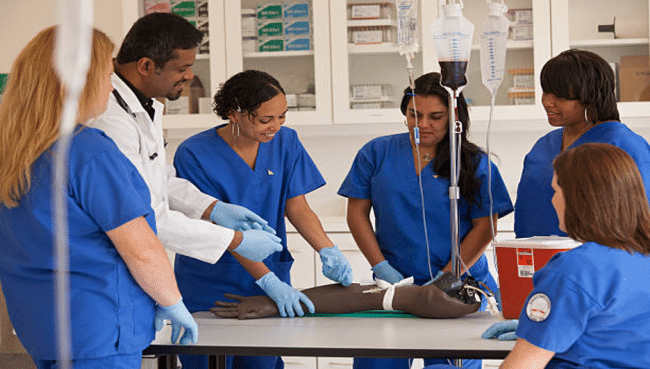
You develop practical skills through lab work, simulation sessions, and clinical placements. In a lab, you practice taking vital signs, communicating with a patient, and responding to a change in condition. Simulation lets you make mistakes and learn from them before working with real patients.
–
A career in nursing can be a major change, so take the time to consider it carefully. Your first degree gave you valuable skills, but the next step takes real effort and a willingness to learn from the ground up.
If nursing feels like the right fit, an accelerated BSN can be a practical path from your first degree to your first nursing role.
