





New York warehouses are under more pressure than ever to improve workplace safety, and a big part of that conversation is happening around loading docks.
The state’s Warehouse Worker Injury Reduction Program officially took effect in 2025, adding new requirements for injury prevention plans, ergonomic evaluations, worker training, and ongoing risk assessments for large warehouse employers. The law is aimed at reducing workplace injuries tied to repetitive motion, heavy lifting, awkward movements, vibration, and other common warehouse hazards.
While the legislation does not specifically target loading docks, many warehouse operators are realizing that the dock is where several of those risks collide at once:
- Forklift traffic
- Trailer movement
- Dock-edge exposure
- Uneven transitions
- Cold air infiltration
- Repetitive push-pull motion
For many New York facilities, the loading dock has quietly become one of the most important parts of warehouse safety planning.
Why Warehouse Operators Are Looking Closer at the Dock
While these policies are a massive change, New York’s warehouse injury conversation did not come out of nowhere.
A report using Bureau of Labor Statistics data found New York warehouse workers experienced injury rates significantly above the national average, helping fuel political pressure for stronger protections.
The updated state requirements now push employers to actively identify workplace risks instead of simply reacting after injuries happen.
This is significant because loading docks are often one of the highest-traffic and highest-impact areas inside a facility.
In a modern warehouse, the loading dock handles:
- Constant forklift movement
- Trailer loading and unloading
- Repetitive pallet handling
- Heavy rolling loads
- Fast-paced shipping schedules
- Exposure to weather and temperature swings
Even small equipment issues at the dock can quickly create larger operational and safety problems.
- A worn dock leveler can create rough transitions that increase forklift vibration and operator fatigue.
- Damaged dock seals can allow moisture, cold air, or debris into the building.
- Weak trailer restraint practices can increase the risk of trailer creep or separation during loading.
Those are the kinds of risks warehouse managers are now being pushed to document and address under New York’s updated framework.
OSHA Has Been Warning About Dock Risks for Years
Federal safety agencies have also spent years warning employers about loading dock hazards.
OSHA specifically notes that loading docks are dangerous areas for powered industrial trucks and warns that forklift falls from dock edges can be fatal.
The agency also recommends securing transport vehicles during loading operations and protecting exposed dock edges to reduce fall hazards.
For warehouse operators, this creates a situation where loading docks are no longer viewed as simple maintenance areas. They are increasingly becoming part of larger injury-reduction and compliance discussions.
Dock Equipment Problems Often Start Small
One reason loading docks are getting more attention is that many serious problems begin with relatively minor maintenance issues.
- A damaged bumper might not seem urgent at first, but over time, improper trailer positioning can impact dock seals, levelers, and trailer alignment.
- A rough dock leveler transition can slowly increase vibration exposure for forklift operators making hundreds of crossings every shift.
- Torn loading dock seals can create slippery conditions during winter while also increasing HVAC strain inside temperature-controlled warehouses.
These issues rarely show up overnight. The harsh truth is they build gradually until operators are forced into emergency repairs, downtime, or injury investigations.
That is why many facilities are shifting toward more proactive dock inspections instead of waiting for failures.
The Ergonomic Side of Dock Safety
One of the more overlooked parts of warehouse safety is ergonomics.
New York’s updated law places major focus on musculoskeletal injuries and repetitive stress exposure.
That matters at the loading dock because operators repeatedly cross transitions between trailers and warehouse floors throughout the day.
Research published in the International Journal of Industrial Ergonomics found dock leveler crossings were one of the most significant contributors to vibration exposure during truck loading operations. The study also found operational and equipment improvements reduced vibration exposure by as much as 30 to 50 percent.
For warehouse operators, that changes the conversation around dock maintenance.
Dock equipment is no longer just about preventing breakdowns, but it is increasingly tied to worker comfort, long-term injury prevention, and operational efficiency.
Why More Warehouses Are Prioritizing Preventive Maintenance
As facilities respond to tighter safety expectations, many are putting more focus on preventive dock maintenance programs as a whole.
Instead of waiting for major failures, operators are inspecting:
- Dock leveler components
- Trailer restraints
- Dock bumpers
- Door seals and shelters
- Hydraulic systems
- Safety barriers and communication lights
This approach helps reduce downtime while also making it easier to identify hazards before they become larger problems.
For facilities running multiple loading bays, even a single dock outage can create shipping delays, congestion, and increased injury risk from rushed operations.
That is why many warehouse managers are paying closer attention to loading dock replacement parts, such as dock seals, bumpers, restraints, and other wear components that directly affect dock performance.
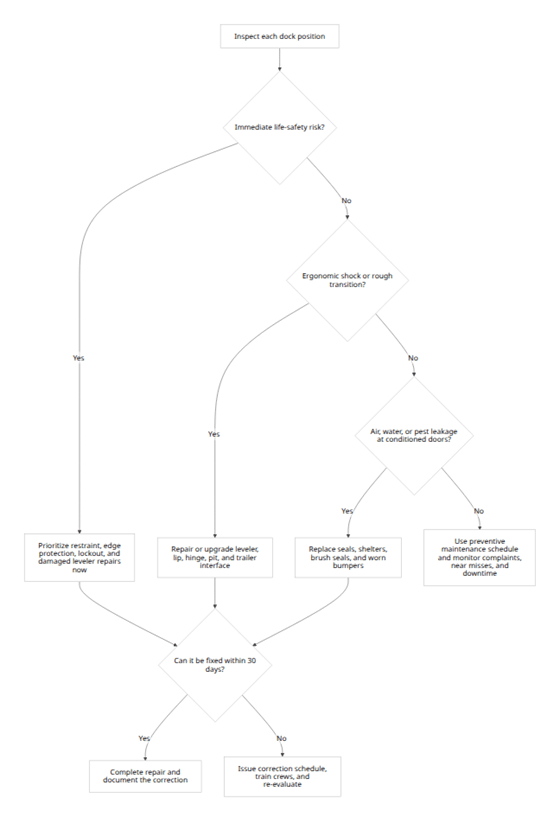
For reference, below is a breakdown of how warehouses can go about evaluating potential concerns at the loading dock:
Cold Weather Creates Additional Challenges in New York
New York warehouses face another issue that many southern facilities do not deal with to the same extent: winter conditions.
Cold air infiltration at dock doors can create uncomfortable working conditions, increase condensation, and create slippery surfaces near loading areas.
Damaged or worn dock seals often become a much bigger issue during colder months when facilities are trying to maintain interior temperatures while trailers cycle in and out all day.
Energy researchers have also found dock seals can play a major role in reducing air leakage and improving climate control efficiency inside industrial buildings.
For refrigerated warehouses, food distribution centers, and temperature-sensitive operations, dock conditions directly affect both safety and operational costs.
Loading Docks Are Becoming Part of the Bigger Safety Conversation
The biggest shift happening right now is that warehouse safety and accident prevention is becoming more of a focus point in New York state.
Instead of focusing only on major accidents, companies are now being pushed to evaluate the smaller operational problems that contribute to injuries over time.
For many facilities, loading docks sit right in the middle of that conversation, focusing on:
- Heavy equipment traffic
- Repetitive motion
- Ergonomic exposure
- Trailer movement
- Weather exposure
- Fall hazards
- Operational bottlenecks
As New York continues tightening workplace safety expectations, warehouse operators are likely to keep investing more attention into the condition and performance of their dock systems.
Because in many warehouses, the loading dock is becoming one of the most important areas in the entire building to get right.


